Planning and logging belong together
A blank workout log is flexible but leaves every programming decision to you. A rigid template provides direction but cannot tell the difference between smooth work and a day where the prescribed load was wrong. RACK joins the two jobs: it plans the session, then responds to what you actually record.
You choose hypertrophy, powerbuilding or powerlifting, the programme length and whether sessions follow fixed weekdays or a flexible rolling queue. The app builds the structure; you can still change a load, cap or extend work, swap an exercise or move the session.
Built for the gym floor
Choose your goal, training style, programme length and schedule instead of building every workout yourself.
Tell Coach what you want from the overall programme and turn it into a plan you can apply.
Use the work you log to get a clear suggestion for what belongs on the bar next.
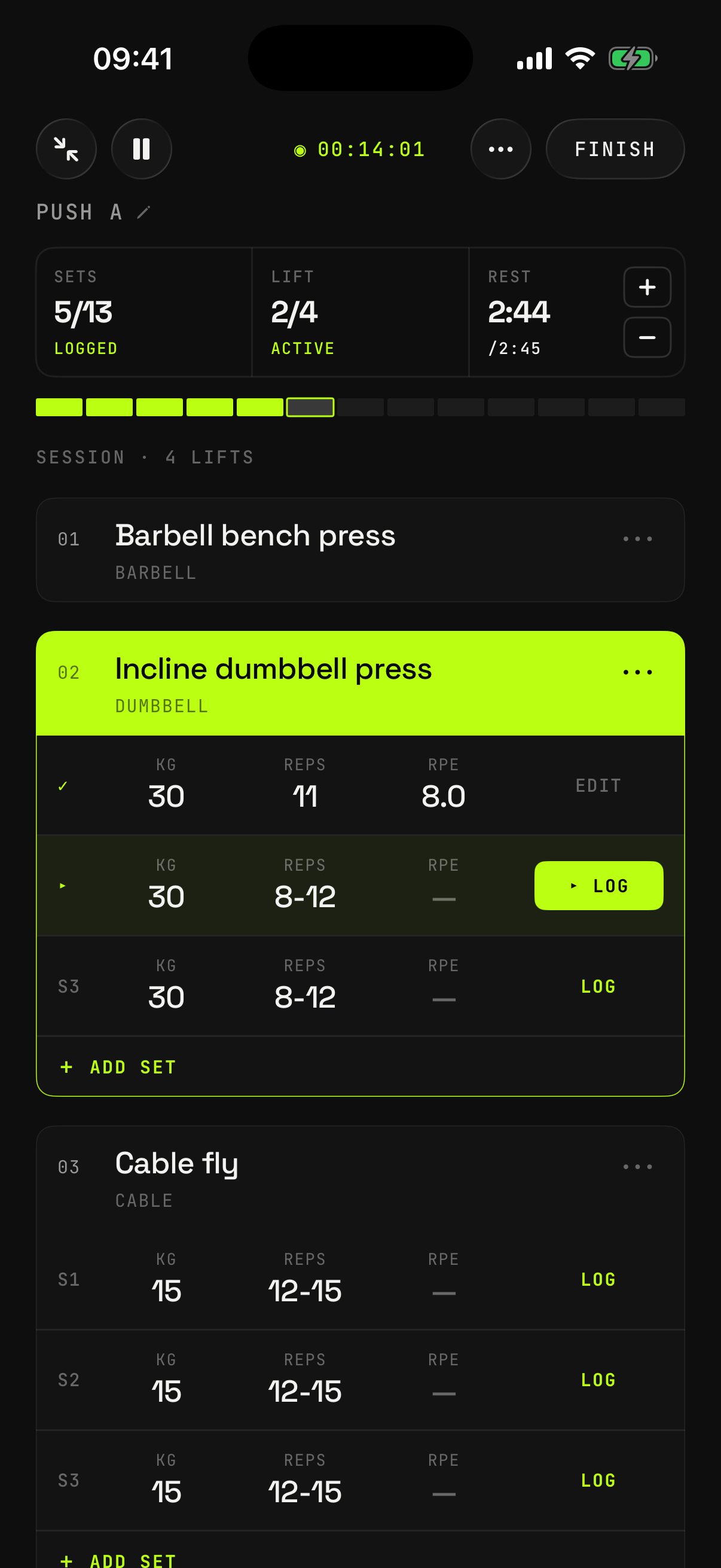
Run the rest timer and send strength set logs back to the paired iPhone session.
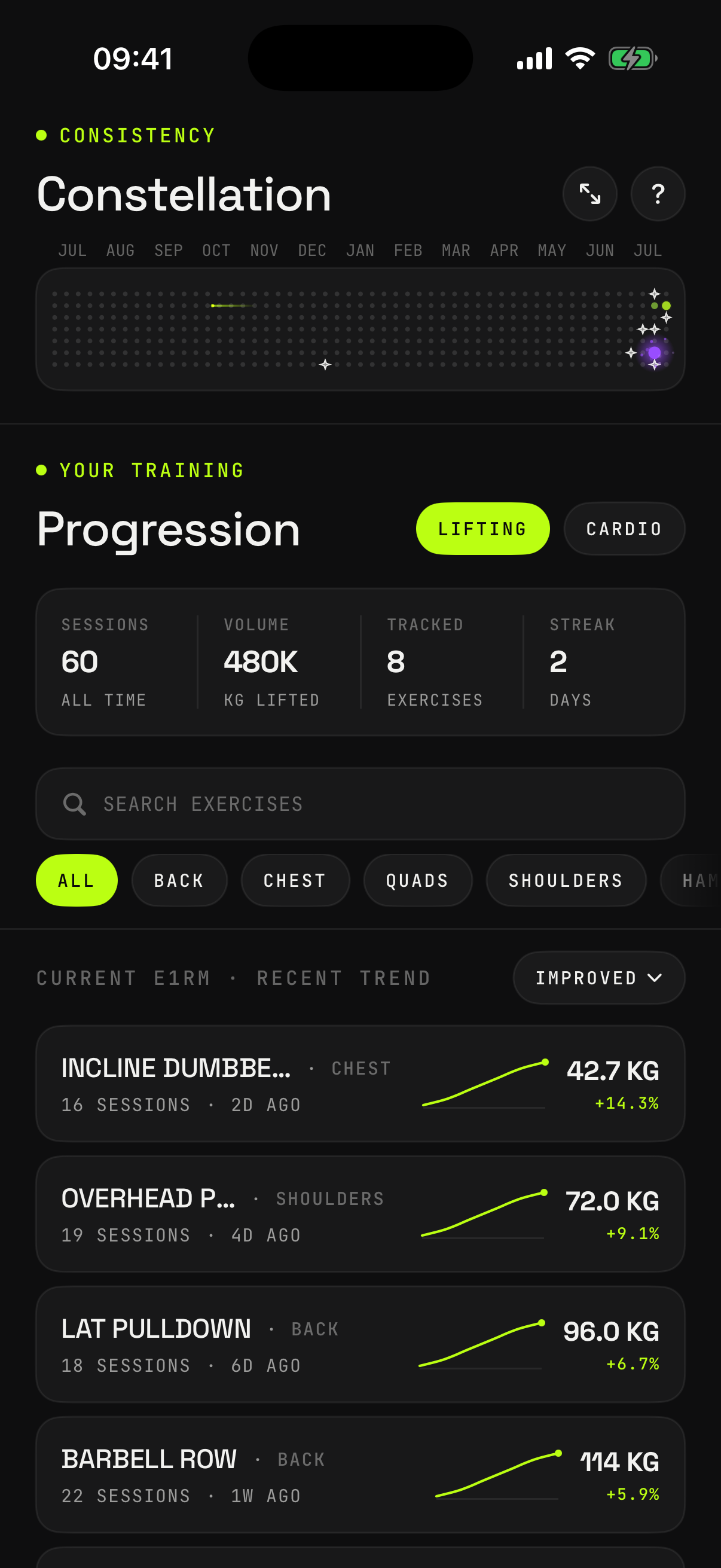
See recent performance, records and an estimated-max trend without leaving the workout flow.
Add a separate 5K-to-marathon run plan and see both disciplines on one calendar.
How RACK knows what weight to suggest
RACK uses the load, reps and effort you record to inform later strength prescriptions. During a session it can suggest the next load. Across the programme it can recalibrate working numbers while preserving the intended shape of the block.
Progress without data-entry drag
The active exercise, prescribed work and rest timer stay close together. History remains available when you need context, but completing a set does not become a form-filling exercise. That matters because logging quality falls when the interface becomes work of its own.
RACK also includes a free Freestyle path for self-directed logging. Adaptive programmes are part of Pro, while the current iPhone beta is free to join through TestFlight.
Keep the habit visible
Share completed workouts with friends, compare volume, streaks, records and XP on friends-only leaderboards, then earn levels and medals as the work adds up.
Who RACK suits
- Lifters who want programmed hypertrophy, powerbuilding or powerlifting rather than a blank log.
- People who want to know what workout and weight comes next.
- People who want to customise the overall plan by talking to RACK Coach.
- Runners who also lift and want both disciplines on one calendar.
Evidence checked: A systematic review and meta-analysis supports session RPE as a valid way to quantify resistance-training intensity. RACK captures RPE at set level as one programming signal, not a diagnosis of recovery.